Beyond the Plate: How Low-GI Indian Foods Are Silently Reversing Diabetes & Unlocking Fat Loss
I. Introduction: India’s Silent Epidemic & a Powerful Nutritional Ally
India, a land rich in culture and cuisine, is grappling with a hidden crisis: an unprecedented surge in diabetes and obesity. Shockingly, our nation now bears the heavy title of the “global epicenter of diabetes.” Millions navigate the daily challenges of managing blood sugar levels and weight. It’s a daunting reality. However, amidst this struggle, a simple yet profoundly effective nutritional tool emerges as a beacon of hope: Low-Glycemic Index (GI) foods, including Low-GI Indian foods.
This isn’t just another fleeting diet trend; it’s a fundamental understanding of how food interacts with your body, offering a sustainable path not just to diabetes control, but to genuine, lasting fat loss. But what exactly is the Glycemic Index, and how can integrating its principles into our beloved Indian diet truly revolutionize your health?
II. Demystifying the Glycemic Index: Your Body’s Fuel Gauge
Imagine your body as a sophisticated vehicle and the food you eat as its fuel. The Glycemic Index is like a sophisticated fuel gauge, measuring how quickly the carbohydrates in a food are broken down into glucose and released into your bloodstream. Foods are ranked on a scale of 0 to 100.
- High-GI foods (70 or more): Think of these as a fast-burning fuel. They rapidly spike your blood sugar, leading to a quick burst of energy followed by a crash, often triggering intense hunger pangs and excessive insulin release. Over time, this constant rollercoaster can strain your body’s insulin response, contributing to insulin resistance, pre-diabetes, and type 2 diabetes.
- Low-GI foods (55 or less): These are the slow-burning, efficient fuel. They digest slowly, causing a gradual and steady release of glucose. This gentle rise in blood sugar avoids sharp insulin spikes, keeping you fuller for longer, reducing cravings, and crucially, allowing your body to more effectively use fat for energy. This steady state is precisely what’s needed for both effective diabetes management and sustainable fat loss. Understanding this principle is the first step towards taking control of your health.
III. The Indian Kitchen’s Secret Weapons: 7 Low-GI Indian foods
Our traditional Indian diet, often misjudged, is a treasure trove of low-GI ingredients that have been staples for centuries. It’s time to rediscover these superfoods. We can weave them strategically into our daily meals for profound health benefits.
1. The Humble Hero: Lentils (Dal)
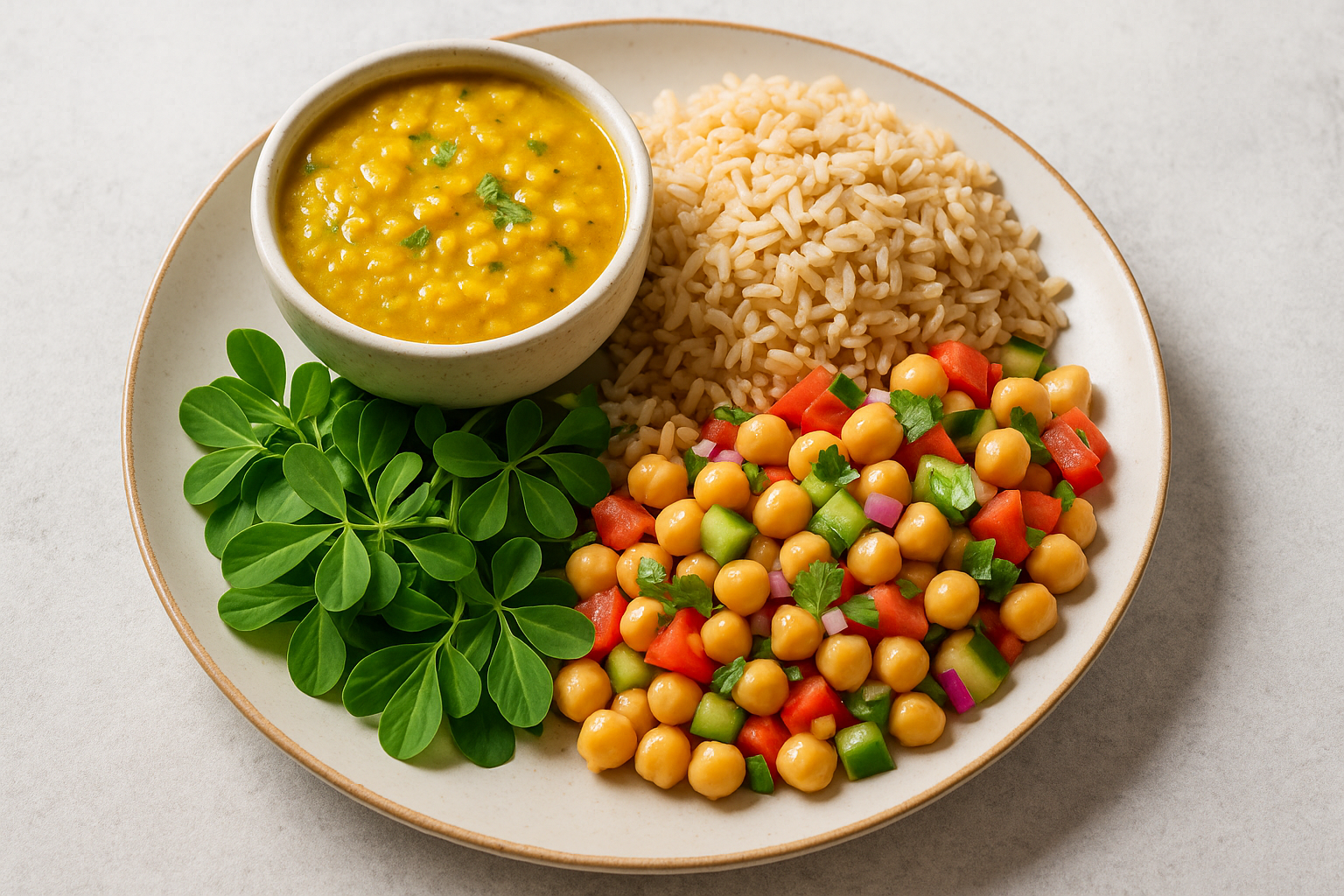
A cornerstone of Indian cuisine, lentils are nutritional powerhouses. With an impressive GI score typically around 30, they are packed with fiber and plant-based protein. This potent combination slows digestion, preventing blood sugar spikes and promoting a feeling of lasting fullness. Incorporate various dals – moong, masoor, tur, urad – into your daily diet through comforting curries, hearty soups, or even innovative lentil salads.
2. The Versatile Wonder: Chickpeas (Chana)
Boasting an excellent GI of around 28, chickpeas are another must-have for blood sugar management. Their rich fiber content not only aids digestion but also significantly contributes to satiety. This makes them perfect for curbing overeating. Beyond the classic chana masala, explore chickpea salads, roasted chickpea snacks, or even chickpea flour (besan) for healthier pancakes (cheela) or savory fritters.
3. The Ancient Grain, Reimagined: Barley (Jau)
Often overlooked, barley, with a GI of approximately 25, is a phenomenal grain for managing diabetes. Its high soluble fiber content, particularly beta-glucans, forms a gel-like substance in the gut, dramatically slowing carbohydrate absorption. Swap it for rice in khichdi, use barley flour for lighter rotis, or add it to soups for a nutritious and filling boost.
4. The Flavorful Healer: Fenugreek (Methi)
More than just a spice, fenugreek has a remarkably low GI, often reported around 25. It has been traditionally used in Ayurveda for its blood sugar-lowering properties. Regular consumption can significantly impact glycemic control. Sprinkle fresh methi leaves generously in your curries, stir-fries, or parathas. For a potent boost, soak fenugreek seeds overnight and consume the water in the morning.
5. The Smarter Staple: Brown Rice
It’s time to make the switch! While white rice, a common staple, typically has a high GI of around 73, its unrefined counterpart, brown rice, boasts a far more favorable GI of approximately 50. This simple swap can dramatically stabilize blood sugar levels and contribute significantly to weight management due to its higher fiber and nutrient content. Brown rice pulao or biryani can be just as delicious and satisfying, making the transition enjoyable.
6. The Breakfast Champion: Oats
With a GI of around 55 (for rolled oats), oats offer sustained energy release and are celebrated for their heart-health benefits. Their soluble fiber helps lower cholesterol and promotes gut health. Beyond the classic oatmeal, explore savory Indian-style oat upma, incorporate oats into dosas or idlis, or prepare convenient overnight oats for a nutritious start to your day.
7. The Sweet Surprise: Sweet Potato
Forget what you thought about potatoes! While regular potatoes can have a high GI of approximately 78, sweet potatoes offer a much healthier alternative with a significantly lower GI of around 50. They are rich in vitamins, minerals, and fiber, making them a fantastic source of sustained energy. Enjoy them boiled, baked, roasted, or as a component in healthy chaats for a diabetes-friendly and delicious snack.
IV. Beyond the List: Weaving Low-GI into Your Daily Indian Life
By making these conscious choices, you not only enhance your meals but also support your health journey towards better blood sugar control and effective weight management.
Incorporating these foods isn’t about rigid rules. It’s about smart substitutions and mindful eating:
- Swap Smart: Gradually replace refined grains (white rice, maida) with whole grains like barley, brown rice, millets, and whole wheat.
- Daily Dal & Chana: Make lentils and chickpeas a non-negotiable part of at least one meal every day. Their versatility makes this easy.
- Balance Your Plate: Always combine your carbohydrates with adequate protein (paneer, chicken, fish, eggs, other pulses) and healthy fats (ghee in moderation, nuts, seeds) to further lower the overall glycemic load of your meal.
- Mindful Portions: Even low-GI foods, in excessive quantities, can impact blood sugar. Practice mindful eating and appropriate portion control.
V. Real Transformations, Real India: Stories of Hope
The power of these dietary changes isn’t just theoretical; it’s transforming lives across India. Take Sathya from Bangalore, for instance. Diagnosed with pre-diabetes and struggling with excess weight, Sathya felt overwhelmed. But by consciously shifting to a diet rich in low-GI Indian foods – incorporating more dal, brown rice, and fenugreek – he witnessed a remarkable change. Within six months, he reduced his HbA1c levels back to a healthy range and shed over 15 kg.
His story is a testament to the profound, yet simple, impact of strategic dietary choices, demonstrating that managing and even reversing conditions like pre-diabetes is genuinely achievable.
Explore More: Low-GI Indian Foods
Discover the remarkable range of low-GI Indian foods that can be easily integrated into your meals for better health outcomes.
The power of these dietary changes isn’t just theoretical; it’s transforming lives across India. Take Sathya from Bangalore, for instance. Diagnosed with pre-diabetes and struggling with excess weight, Sathya felt overwhelmed. But by consciously shifting to a diet rich in low-GI Indian foods – incorporating more dal, brown rice, and fenugreek – he witnessed a remarkable change. Within six months, he reduced his HbA1c levels back to a healthy range and shed over 15 kg. His story is a testament to the profound, yet simple, impact of strategic dietary choices, demonstrating that managing and even reversing conditions like pre-diabetes is genuinely achievable.
VI. Conclusion: Your Journey to a Healthier, Happier You Starts Now
The statistics on diabetes and obesity in India are alarming. However, the solution can be found right in our kitchens. By consciously choosing and incorporating these delicious, low-GI Indian foods into your daily diet, you empower yourself to profoundly improve your health.
You gain effective control over diabetes, support sustained and healthy fat loss, and ultimately, pave the way for a more energetic and vibrant life. The journey to a healthier, happier you isn’t a complex one; it begins with simple, informed choices.
Start exploring these incredible foods today, and prepare to witness the incredible results for yourself!
Reference Links:
- Harvard Health Publishing: https://www.health.harvard.edu/diseases-and-conditions/the-glycemic-index-and-your-health
- American Diabetes Association: https://diabetes.org/food-nutrition/what-can-i-eat/understanding-carbs/glycemic-index-and-diabetes
- Indian Journal of Endocrinology and Metabolism: https://www.ncbi.nlm.nih.gov/pmc/articles/PMC3968798/ (Note: I chose a relevant general guideline article from the journal, as specific “dietary guidelines for diabetes” isn’t a single definitive article but often a consensus statement or review.)